
OUD
Opioid use disorder
Primary indication
~40M
people globally · WHO 2024
Stage
TRL 5
Making addictions predictable
Subreal is a digital health company building, studying and researching new digital interventions for addiction health. We work across neurological, physiological and psychometric signals — from regulated clinical software to a foundation model for recovery and the medicines that may follow.








Substance use disorders are chronic, and relapse is part of recovery. The clinical tools addiction services monitor with — sporadic questionnaires, self-reported craving and mood scales — were not built to catch the moment-to-moment changes that prevention requires.
They are prone to recall bias, social desirability, and long gaps between contacts. By the time the next appointment arrives, the window for intervention has often closed.
Subreal works across the data, model and intervention layer of addiction medicine. Each programme reinforces the others — clinical deployment generates the longitudinal record, the record trains the model, and the model opens routes to better treatment.
A class IIb investigational SaMD for opioid, alcohol and benzodiazepine use disorders. A patient app and clinician dashboard turn neurological, physiological and psychometric signal — captured through short video check-ins and digital biomarkers — into near-term risk and a route to intervention.
A multimodal foundation model for addiction recovery. Pretrained on longitudinal patient journeys — EHR timelines, clinical notes, prescriptions, psychometrics and digital biomarkers — then adapted to relapse, overdose, disengagement and pharmacological-response tasks.
An emerging programme using our data and models to support evidence generation and the discovery of new pharmacotherapies for addiction — including planned work on GLP-1 receptor agonists, brain organoids and neurological cohorts.
“We bring objectivity to a field that has, for too long, relied on what the patient remembers to tell us.”
Switch the signals on and off to see how the risk picture changes over a three-week window. This is a worked illustration of the method, not live model output or a real patient record.
The treating team is alerted on day 12, while the patient is still engaged.
That is 8 days earlier than self-report alone, which only crosses the threshold on day 20.
Illustrative figures for explanation only. Subreal-CARE is investigational; escalation thresholds are pre-specified with the treating service, and every alert is reviewed by a clinician before any change to care.
Subreal-CARE is built as a single platform configured for three substance classes that account for the majority of preventable relapse, overdose and treatment dropout worldwide.
Stable operational performance, integration with UK addiction services, and full medical-device conformity (Class IIb) are the upcoming milestones across all three indications.
Our work is tested in the open, with NHS and academic partners, and published under DOI — early economic evaluation with CHEATA at Nottingham University Hospitals NHS Trust, relapse-prediction and digital health methodology with Sheffield Hallam, and innovation policy work with the University of St Andrews.
Planned work includes GLP-1 receptor agonists in addiction, neurological cohort research including fMRI, and NLP on clinical notes. Studies, protocols, partners and publications all live in one place.
Join our lived-experience community to inform future study design, participant materials and digital tools for addiction recovery. You can also register interest in research opportunities as they open.
Get involved→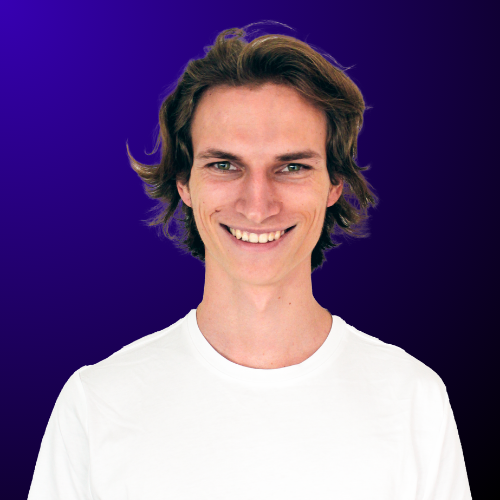
“What if we could predict relapse and overdoses, and make the whole recovery journey more predictable?”
Michał founded Subreal in 2024 to build an AI-based Software as a Medical Device for substance use disorders. Subreal is a Polish-British company headquartered in London and operating across the UK clinical research ecosystem.
The team works at the intersection of digital biomarkers, machine learning and regulated medical software — and partners with academic groups across St Andrews, Nottingham, Sheffield Hallam and Birmingham.